Sunday Sermon · 11 October
Living a Life of Continual Renewal
Isaiah 6:1–8
Speaker: Pastor Mao Yilin


Isaiah 6:1–8

Pastor Chen Jianwei reminds us from Proverbs 16:30: A person’s true condition is often revealed in his eyes, expressions, silence and attitude; spiritual life not only manages external behavior, but also allows God to purify inner thoughts and motives.
Issue 785 · 11 October 2026 · 10:30 AM
Worship, fellowship and grow together
This year's retreat, “Rooted and Built Up, Taking Hold of the Land,” will be led by Pastor Wei Yifa. May we put down deep roots in Christ and grow strong in the truth. Through three days of worship, fellowship and quiet time with God, may we be renewed and grow together in faith and gratitude.

Theme: Rooted and Built Up, Taking Hold of the Land · Speaker: Pastor Wei Yifa · Scripture: Colossians 2:7. For details, contact Pastor Chen Jianwei.

Speaker: Pastor Chen Jianwei · Scripture: Psalm 102:26–27. Brothers and sisters shared the message, a meal and Mid-Autumn fellowship, thankful for the time together that the Lord gave us.
Bai Sheng Church and Danga Bay Fellowship will visit Sawit New Village to share care and blessings with residents during the Mid-Autumn season. May we go with sincere love, praying for each encounter so that more friends may experience the Lord’s grace.

Please follow the meeting point and itinerary shown on the poster.
Common church forms and blessing images
Here are commonly used church resources. Select an item to view its full image. New resources will be added to the list in order.
Rooted in the truth, growing in faith
Isaiah 6 shows us that renewal begins with an encounter with God. King Uzziah has died and the earthly order is changing, yet the prophet sees the Lord still seated on a high and exalted throne. Circumstances may be shaken and human supports may disappear, but God’s authority and holiness never change. True revival is more than a passing surge of enthusiasm or a change in outward habits. In God’s light, we come to know Him and ourselves anew, and respond to His call with obedience.
Isaiah sees the Lord on His throne. The seraphim call out His holiness to one another, the thresholds shake, and the temple fills with smoke. This vision turns our eyes from an earthly crisis to the heavenly throne. King Uzziah will pass away, and human strength and institutions have their limits, but God still reigns. When family, work, health or ministry changes, our first question should be less “When will things return to normal?” and more “Do I still see God seated on the throne?”
God’s holiness means that He is perfectly pure and without sin, and wholly distinct from His creation. Deuteronomy 4:24 and Hebrews 12:29 both describe God as a consuming fire, reminding us not to approach Him carelessly. Worship is more than singing and gathering. Seeing God’s greatness should fill us with reverence and give Him first place in our choices, relationships and daily priorities.
When Isaiah sees God’s glory, he does not boast about his standing or service. He confesses that he is a man of unclean lips living among a people of unclean lips. Comparing ourselves only with others can make us self-righteous or discouraged. In God’s light, we see that the problem is not only in our circumstances or in other people, but also in our own hearts, words, motives and habits.
The more deeply we know God, the more honestly we can know ourselves. That knowledge does not lead to despair, because the holy God is also merciful. He shines His light on us to lead us to repentance, cleansing and a new beginning. Spiritual renewal starts when we stop hiding and allow God to show us what needs to change.
A seraph touches Isaiah’s mouth with a burning coal from the altar and declares that his guilt has been taken away and his sin forgiven. Isaiah does not cleanse himself by willpower; cleansing is God’s gracious gift. The altar also points us to the redemption accomplished by Christ. We cannot remove guilt through outward performance, but through faith in Christ we can receive forgiveness and a new beginning.
The coal touches Isaiah’s lips, reminding us to place before God the parts of ourselves where we are most vulnerable to sin. God not only forgives our past; He also renews our speech, turning complaints into gratitude, judgment into encouragement, and hurtful words into words that build others up. Ephesians 5:26–27 speaks of the Lord cleansing the church through His word. God’s word continues to wash our thoughts and values so that the church reflects Christ’s beauty in holiness.
After being cleansed, Isaiah hears the Lord ask, “Whom shall I send? And who will go for us?” He first sees God, confesses his sin and receives cleansing; only then does he hear the commission. God’s call is not for people who think they are perfect, but for those who have received grace and are willing to obey. A renewed life does not stop at being moved; it responds in concrete ways.
God still speaks to us through Scripture, the church and the needs around us. Some are called to be faithful witnesses in their families. Others serve through care, worship, teaching or practical support, while still others show honesty and love at work. The forms of calling differ, but the heart is the same: to let God use us to bring His truth and grace to others.
Isaiah does not first list his conditions or wait until he feels fully prepared. He says, “Here am I; send me.” This is not an impulsive burst of enthusiasm, but the response of someone awed by God’s glory and cleansed by grace. True dedication is not about proving our ability. It is acknowledging that our lives belong to God and allowing Him to direct their course and purpose.
We too can respond through small, concrete actions each day: faithfully completing what we have been entrusted with, caring for someone in need, choosing forgiveness in conflict, holding to holiness in temptation, and relying on the Lord when tired. Obedience is often not one dramatic decision, but a series of quiet and genuine choices.
“Continual renewal” means returning to God again and again. Each day, prayer and Scripture turn us back toward Him, invite the Holy Spirit to search our hearts, and allow God’s word to correct our perspective. Every time we worship can be a fresh moment of seeing God; every confession, a moment of receiving grace; and every act of service, a response to His call.
The renewal of the church also begins with personal renewal. When brothers and sisters revere God together, confess and forgive one another, and willingly take up their calling, the church does more than maintain its gatherings. It bears witness to God’s holiness and love in the world.
Isaiah 6:1–8 sets out a clear path of renewal: see the Lord on His throne, recognize ourselves in the light of His holiness, receive forgiveness and cleansing from the altar, hear His word, and answer His call. May we not be content with past experiences or retreat because of our weakness. May the Lord renew our understanding, words and actions each day, so that we can say sincerely, “Lord, here am I; send me.”
Pastor Mao Yilin’s original Chinese slides for “Living a Life of Continual Renewal.”
Read original sermon slides (Chinese PDF) Download original sermon slides (Chinese PPTX) ›
The Israelites came out of Egypt, passed through the Red Sea, walked in the wilderness, and finally entered Canaan. This is not only a national experience that occurred in history, but also allows us to see a spiritual picture of the growth of a believer's life. Egypt typifies the domination of sin, the Red Sea typifies the complete separation brought about by redemption, the wilderness typifies the process of faith being refined and life being shaped, and Canaan typifies the life of victory, abundance, and rest in God's promises. God’s intention is not only to save people from suffering, but also to free people from the power of sin, turn to Christ, and become truly His people.
For the Israelites, Egypt was not only a living environment, but also a place of slavery. They were under the control of Pharaoh and had no real freedom. Similarly, if a person lives in sin, even if he appears to have choices on the outside, he may still be bound by lust, fear, pride, bitterness, and worldly values in his heart. God calls us to "exit Egypt" not just to change the external environment, but to leave all the sin and worldliness that dominates our lives, no longer be slaves to sin, and only to return to Him and obey Him.
Trusting in Christ is more than adding a religious practice to life. It is a change in who rules us: once we lived for ourselves, but now we let Christ be Lord; once we followed the ways of the world, but now we seek to live by God’s word; once sin ruled us, but now the Holy Spirit teaches us to reject sin and choose what is right. As 2 Corinthians 5:17 says, anyone in Christ is a new creation: the old has passed away, and the new has come.
The Israelites were able to leave Egypt not because they were stronger than others, nor because they defeated Pharaoh with their own strength, but because God took the initiative to save them. Our salvation is also not earned through good deeds, self-cultivation, self-discipline, or religious merit; human efforts cannot remove sin, nor can we regenerate ourselves. Only the salvation completed by Jesus Christ on the cross can break the chains of sin and give us a new identity and life.
Therefore, Christians should neither boast nor despair because of their weakness. The basis of our salvation is not "how well I have done" but "what Christ has done." When we receive salvation by faith, we no longer belong to sin and darkness, but to the Lord who purchased us with His precious blood.
The Red Sea separated Egypt from the path God was leading the people to. Crossing the Red Sea meant that the old bonds of servitude had been severed, and the original masters could no longer legally rule over them. Spiritual life also requires such a clear distinction: we cannot look forward to the promises of God and at the same time miss the life in Egypt; we cannot say that we follow the Lord with our mouths, but still regard sin as comfort and reliance in our hearts.
The Red Sea also reminds us that God often shows His power when people have no other way out. There was a sea in front of them and a pursuing army behind them. The Israelites could not solve it on their own, but God himself made a way. When believers encounter desperate situations, they should not view them as evidence of God's abandonment; sometimes that is when God wants us to stop relying on ourselves and learn to trust Him completely. What is impossible with man is possible with God.
The wilderness is not a place where God forgets his people, but a school where God trains his people. Everyone may have a wilderness experience in their life: the environment is difficult, the road is long, prayers seem to be unanswered, and efforts are yet to be rewarded. Such times do not mean that God has left us. Rather, they are often times and settings permitted by Him to shape spiritual life.
In the wilderness, God dismantled people’s illusion that “it’s enough on our own” and made us see our own limitations. He also exposed the hidden complaints, fears, pride and unbelief, allowing the true nature of the old man to be revealed. If the low points of life are left in God's hands, they will no longer just be a blank space of pain, but will become a place where faith takes root, character is refined, and relationship with God deepens.
First, God destroys people’s self-righteousness, so that we no longer justify ourselves by our own standards, nor do we easily judge others, but humbly admit that everything is grace. Second, God refines people’s faith and obedience, turning us from relying on visible protection to trusting God’s words and guidance. Third, God deals with the old man and selfish desires so that we no longer let desires, emotions, and self-will rule, but rather deny ourselves every day and learn to be considerate of the Holy Spirit.
The refinement of the wilderness is not to destroy us, but to remove impurities that hinder the maturity of life. God not only changes our circumstances, but also changes our hearts; He does not just let us "get through the difficulties," but makes us more like Christ after going through the difficulties.
Exodus 16 records God’s gift of manna, Chapter 17 records water coming out of the rock, and also records the battle with the Amalekites. These experiences allow us to see that God not only led the people out of Egypt, but also provided for them every day in the wilderness. Manna cannot be hoarded in large quantities, reminding us that we need to come before God every day to receive words and grace; the living water flowing out of the rock reminds us that it is Christ who truly satisfies the soul; fighting reminds us that spiritual growth is not about being easy and contented, but learning to win through prayer, obedience, and mutual support.
Sometimes God will not put all the things we need for a lifetime in front of us at once, but He will give us enough grace for today. Faith is when you still can’t see the answer tomorrow, but still faithfully take the step today.
Hebrews 3:16–19 solemnly reminds us that although that generation had seen miracles and experienced salvation, they were unable to enter rest because of their disobedience and unbelief. Spiritual experience in itself cannot replace continued trust; receiving grace yesterday does not mean that we can allow our hearts to be hardened today. Repeated complaining will obscure grace, fear will exaggerate difficulties, and self-centeredness will cause people to reject God's guidance.
Therefore, we must always examine our hearts: Do we still believe that God is good even when things are not going our way? Are you still willing to obey while waiting? In the face of difficulties, should we feed unbelief with complaints, or should we strengthen our faith with prayer and thanksgiving? True faith is not never having doubts, but choosing to hold on to God’s word in the midst of doubts.
The good land of Canaan was not a reward that the Israelites earned through their own merits, but a grace that God had already prepared and promised. They were able to prevail, not because of force, experience, or numbers, but because God was faithfully with them. Similarly, the abundant life that Christians pursue is not a perfect performance created by self-discipline and good deeds, but the fruit of living in Christ, relying on the Holy Spirit, and obeying God’s words.
Entering Canaan does not mean that there will be no more wars, but that our lives will no longer be controlled by Egypt, nor will we stay wandering in the wilderness for a long time; we begin to inherit God's promises by faith, find true rest in Him, and live out victory, maturity, and abundance in life, family, work, and service.
God leads everyone in His perfect order: first, he saves us from bondage, then refines our lives through the wilderness, and finally leads us into the promise. God can quickly bring people out of Egypt, but it often takes a lifetime of practice to remove "Egypt" from people's hearts. May we not linger on the old bondage, never fall down in the wilderness due to unbelief, and never rely on our own strength; let Christ be the center of our lives, and learn humility, obedience, gratitude, and trust in every trial until we find abundant life and true rest in Him.
Pastor Chen Jianwei’s complete original Chinese manuscript for “Lessons from the Exodus and Entry into Canaan.”
Read original manuscript (Chinese) Download original Word manuscript (Chinese) ›
Our world is full of change: people, circumstances, health, relationships and fortunes all change. Psalm 102 shows us that even though heaven and earth will wear out, God remains forever. Hebrews 13:8 declares that Jesus Christ is the same yesterday, today and forever. Faith does not promise a life without storms. It tells us who is the unshakable rock amid every change.
People's intentions, abilities, health and circumstances change. We may experience meetings and farewells, closeness and distance, and discover that even our once firm resolve can grow weary. We cannot build our ultimate security on anyone's promise, opinion or presence. This does not mean distrusting others. It means accepting human limits with grace and placing our deepest trust in God. Even when people fail us and relationships change, the Lord still knows and cares for us; his promises will not fail.
Social, economic, work and family circumstances can change unexpectedly. If outward conditions are the foundation of our peace, fear can take hold when they shift. God calls us to build on his word: to face real difficulties while still trusting that the Lord is in control. We can address problems seriously and make responsible choices, entrusting the tomorrow we cannot control to the Lord who is with us today.
The moon waxes and wanes, and life has its highs and lows. Full and joyful days invite gratitude; days of loss do not mean that God has left us. We may see only what is unfinished before us, while the Lord is working beyond our sight. Faith does not force us to pretend to be happy. It waits even through tears and trusts that dawn will come after darkness. The gaps in life can become places where grace enters and our character is formed.
Ecclesiastes 7:8 says that the end of a matter is better than its beginning. We often judge a whole life by one moment, but God sees the entire path. The start may seem ordinary, and the journey may be winding or filled with waiting we cannot understand. Yet in the Lord's hands, the story is not over. He can use hardship to refine faith, waiting to teach patience, and wounds to help us comfort others. Our task is to walk faithfully today and entrust the outcome to him.
Psalm 30:5 reminds us that God's anger lasts only a moment, but his favor lasts a lifetime: weeping may stay for the night, but joy comes in the morning. Suffering has its season, yet it cannot outlast God's enduring grace. Tears do not prove weakness; they show that we still hope and pour out our hearts to God. When we bring our sorrow to him, he gives sufficient grace to carry us through the night and renews our strength in his time.
People and circumstances change, and the moon waxes and wanes. Yet Jesus Christ's character, love, faithfulness and salvation never change. He showed grace yesterday, shows grace today, and will fulfill his promises in the future. True peace is not an unchanging environment, but the presence of the Lord who never changes in every environment. We can entrust our past to his healing, our present to his guidance, and our future to his faithfulness.
May we anchor our hope more deeply in Christ rather than in passing people and things. Give him thanks in good times and rely on him in hardship; hold fast to his word when the path ahead is unclear. He alone never changes and can be our firm refuge and eternal hope.

Serving is a response to God’s grace. He gives us life and different gifts according to His will. Because we love Him and thank Him, we place ourselves in His hands. The slides remind us to offer our bodies as living sacrifices in worship. God does not depend on our abilities to accomplish His purposes, yet He graciously invites us to take part in His work.
Gratitude reminds us that all life and ability come from the Lord. We need not compare ourselves with others or wait until we feel capable enough to begin. Even when our gifts seem modest, we can start with a willing heart, seek His guidance in prayer and faithfully carry out what He entrusts to us. We rely on His grace, giving glory to the God who gives it.
Serving is also a journey of being shaped by the Lord. When working together reveals impatience, self-centredness, neglect or weakness, we need not hide or lose heart. Let us examine ourselves through God’s Word, confess our failings in prayer, listen to correction and apologise to those we have hurt. Looking to Jesus Christ, we return to grace, allowing Him to purify our motives and mature both our lives and our service.
The church is one body with members of different ages, experiences and gifts, each with a place entrusted by the Lord. Visible roles and quiet work behind the scenes can all be offerings of love. We listen, respect one another and share burdens, without jealousy, complaints or contempt over different responsibilities. Through humble, loving communication and shared discernment, we follow His leading so that Christ’s body is built up in love.
May we come before the Lord with gratitude, continually renewed in His light, and walk together with our brothers and sisters. May every sincere and faithful act of service bear witness to a life that glorifies God and blesses others.

Job held on to faith through suffering and did not abandon God when circumstances changed. This message reminds us that perseverance means trusting God’s sovereignty even when we do not understand. Moving from hearing about God to seeing Him, suffering can refine our faith and deepen our knowledge of Him.
Remembering moments of fellowship, worship and grace
Brothers and sisters come before the Lord together and declare in songs that He is our strength, refuge and unwavering hope; the worship team coordinates with each other to lead the congregation to look up to the cross.
From the sound of the piano to the singing, every gift is dedicated to the glory of the Lord; may our worship become a declaration of faith and a strength to support each other.

Regardless of whether they are young or old, brothers and sisters stood together to praise, connected in the love of the Lord, and filled the gathering with gratitude and hope.
Pastor Chen Jianwei uses the experience of the Israelites leaving Egypt, traveling through the wilderness, and heading toward the Promised Land to encourage us not to lose faith in trials, to obey God's guidance, and to move forward firmly in His promises.
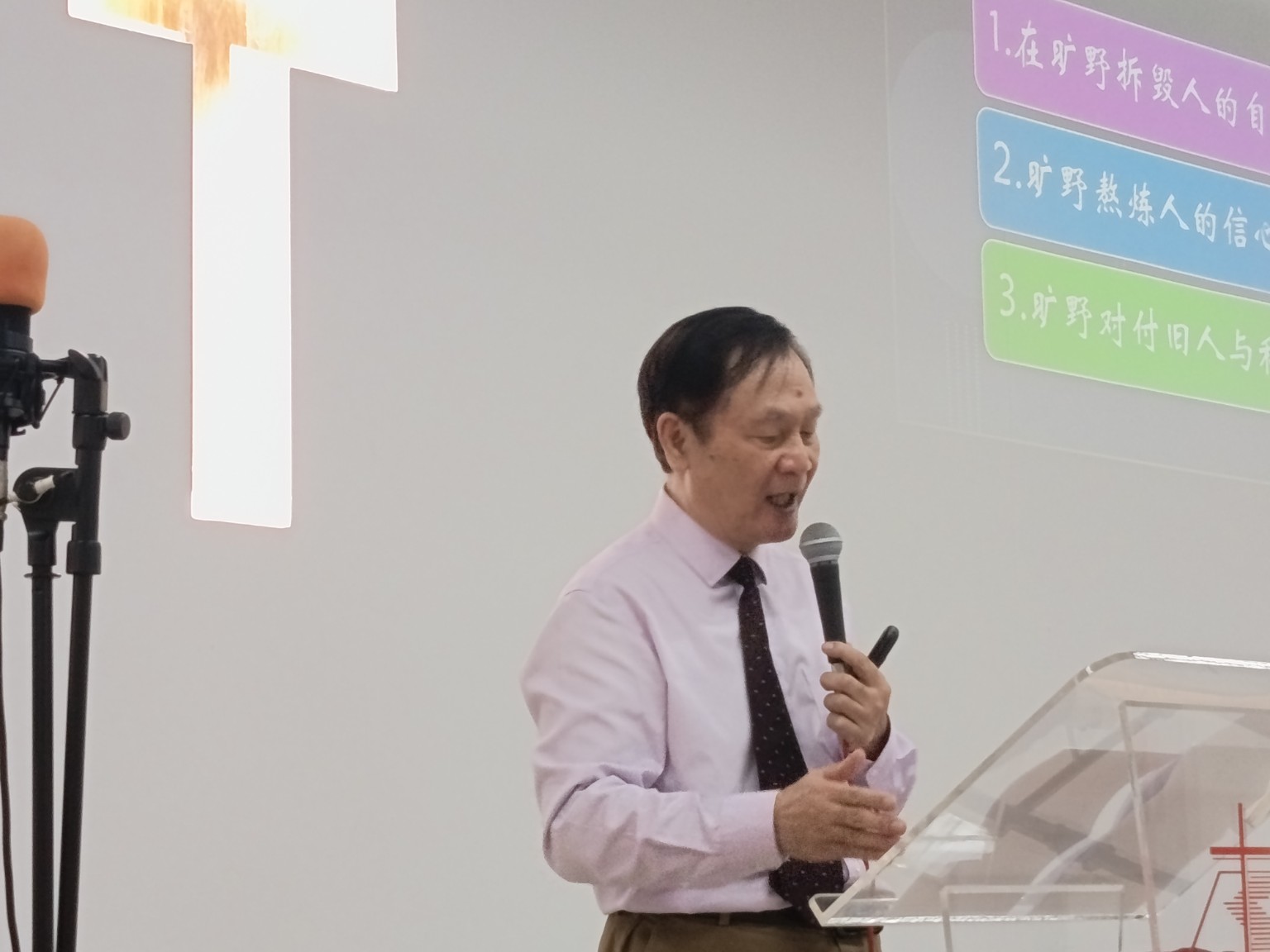
The wilderness is not the end, but a place where God shapes life and exercises faith; may we follow Him not by sight but only by faith.
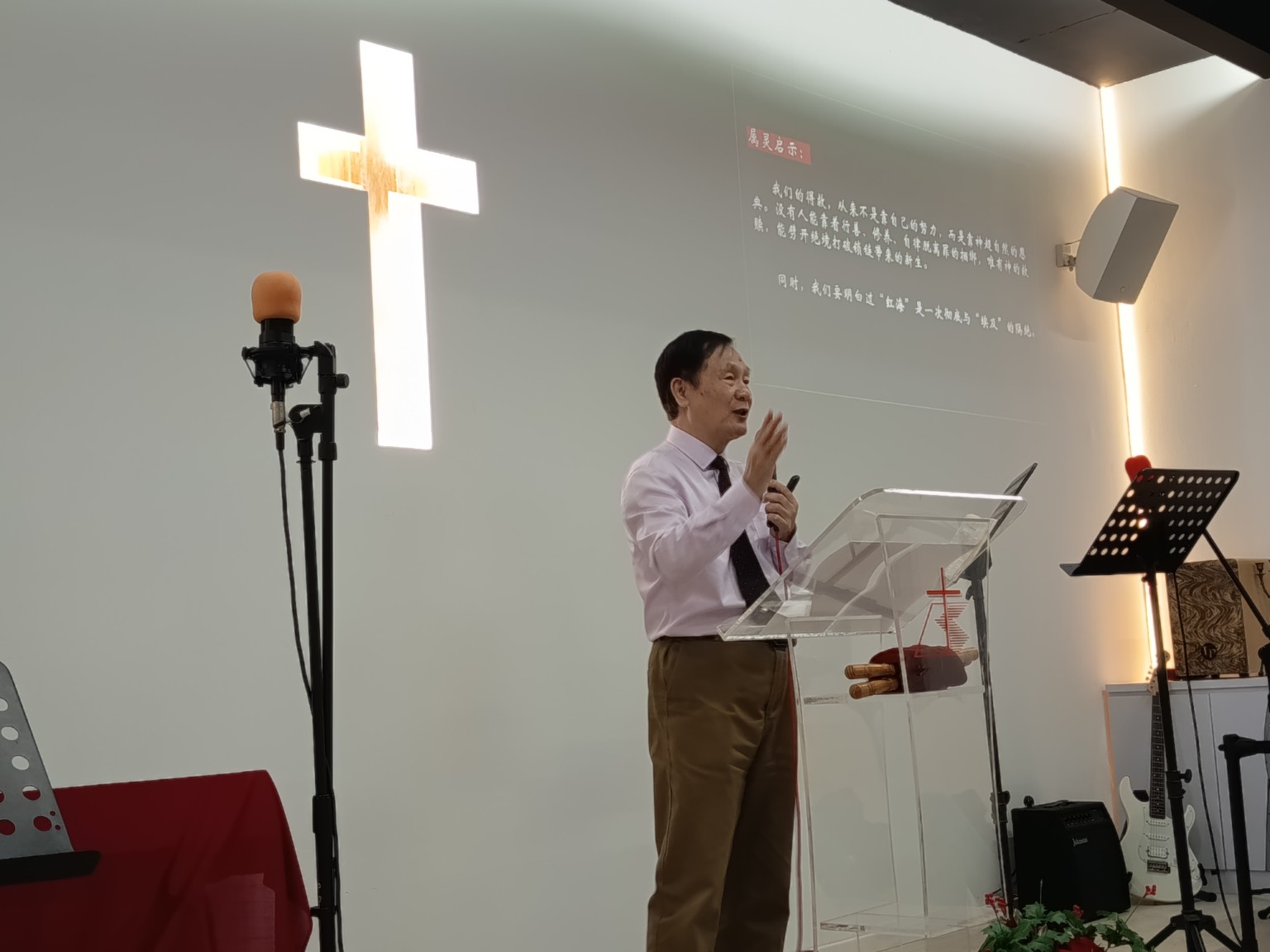
God’s leading never stops. Even if the circumstances are difficult, we can still rely on His faithfulness, put aside fear and complaints, and move forward toward the abundant life He has prepared.
Teachers accompany the children with patience and care, and they learn biblical truths through silence, interaction and sharing; may the Lord’s words enter the hearts of young children so that they can grow up healthily in love.

Listening, talking and taking a break in the classroom are all times for getting to know and build each other up; I hope every child can feel the love of the Lord in the church family.
Gathered by the Lord's grace, brothers and sisters sang together and looked to the cross, responding with gratitude and joy to the Lord who never changes.

The congregation stood in worship, counted God's blessings through song, and turned their hearts again to Jesus Christ.
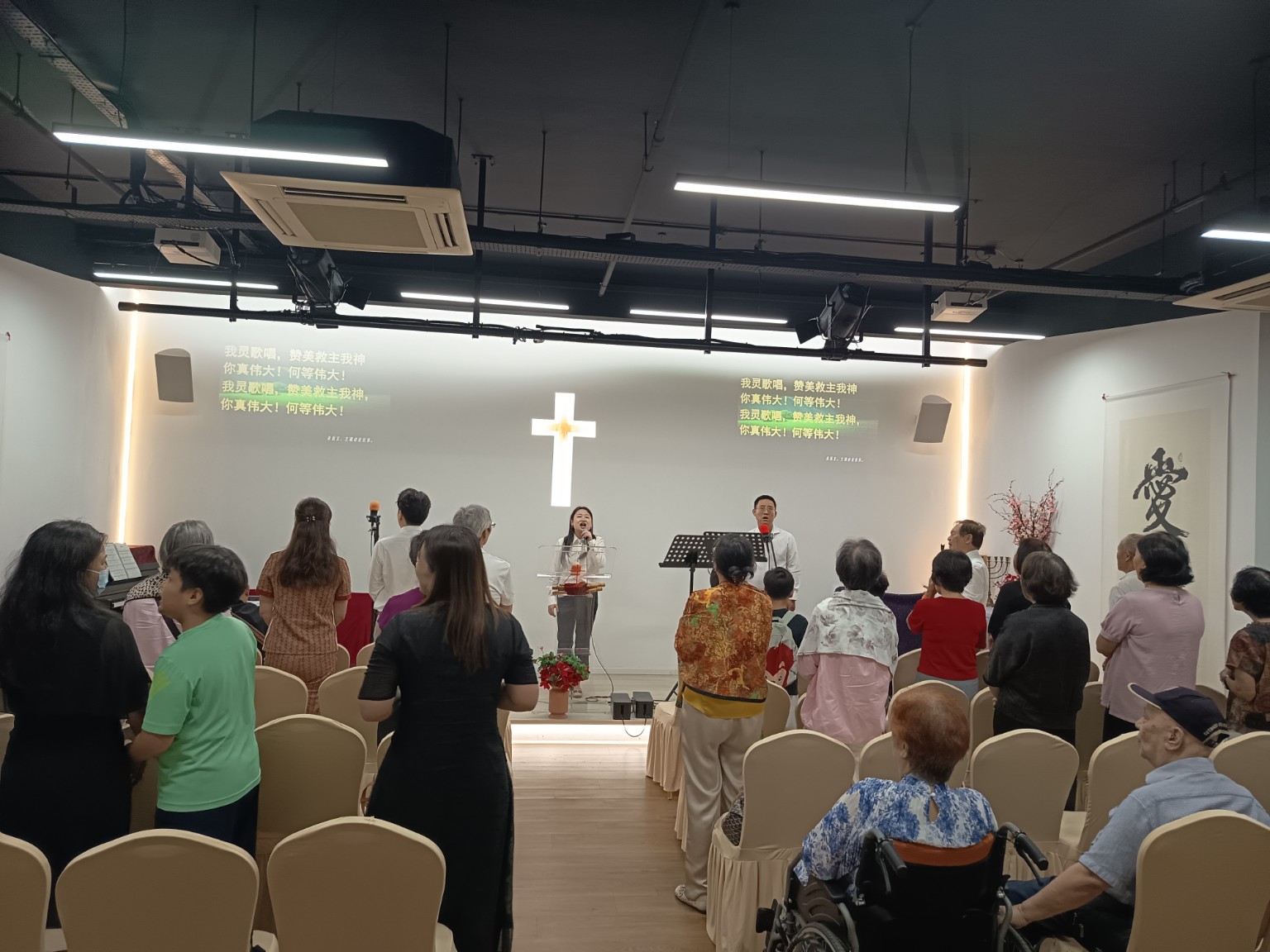
The worship team led the congregation in praise. May our songs be a response of faith and give glory to God.
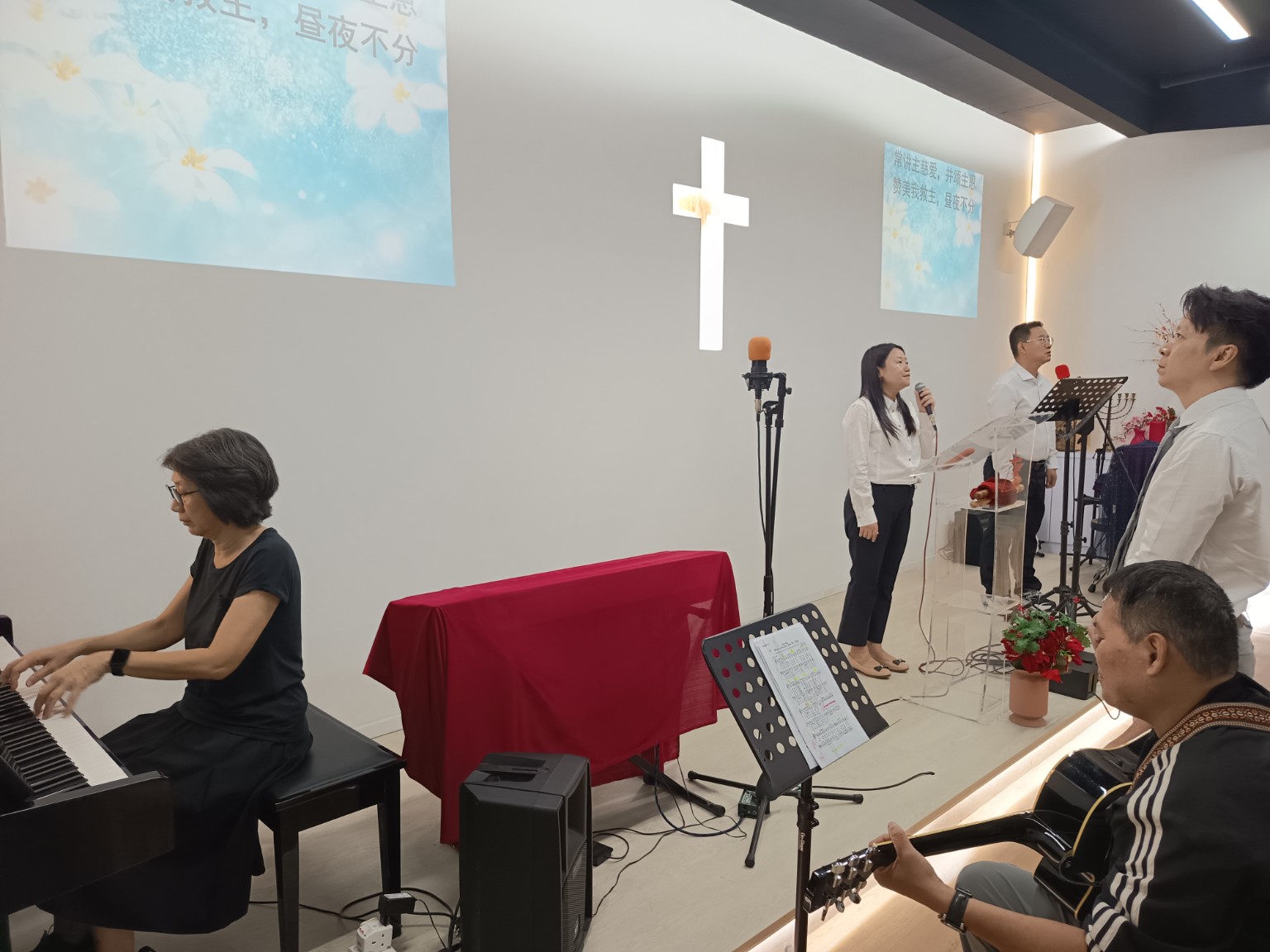
Piano, voices and guitar blended as the team served faithfully, helping the congregation draw near to the Lord in worship.
Pastor Chen Jianwei preached from Psalm 102:26–27 and Hebrews 13:8: heaven and earth change, and human circumstances pass, but Jesus Christ is the same yesterday, today and forever.
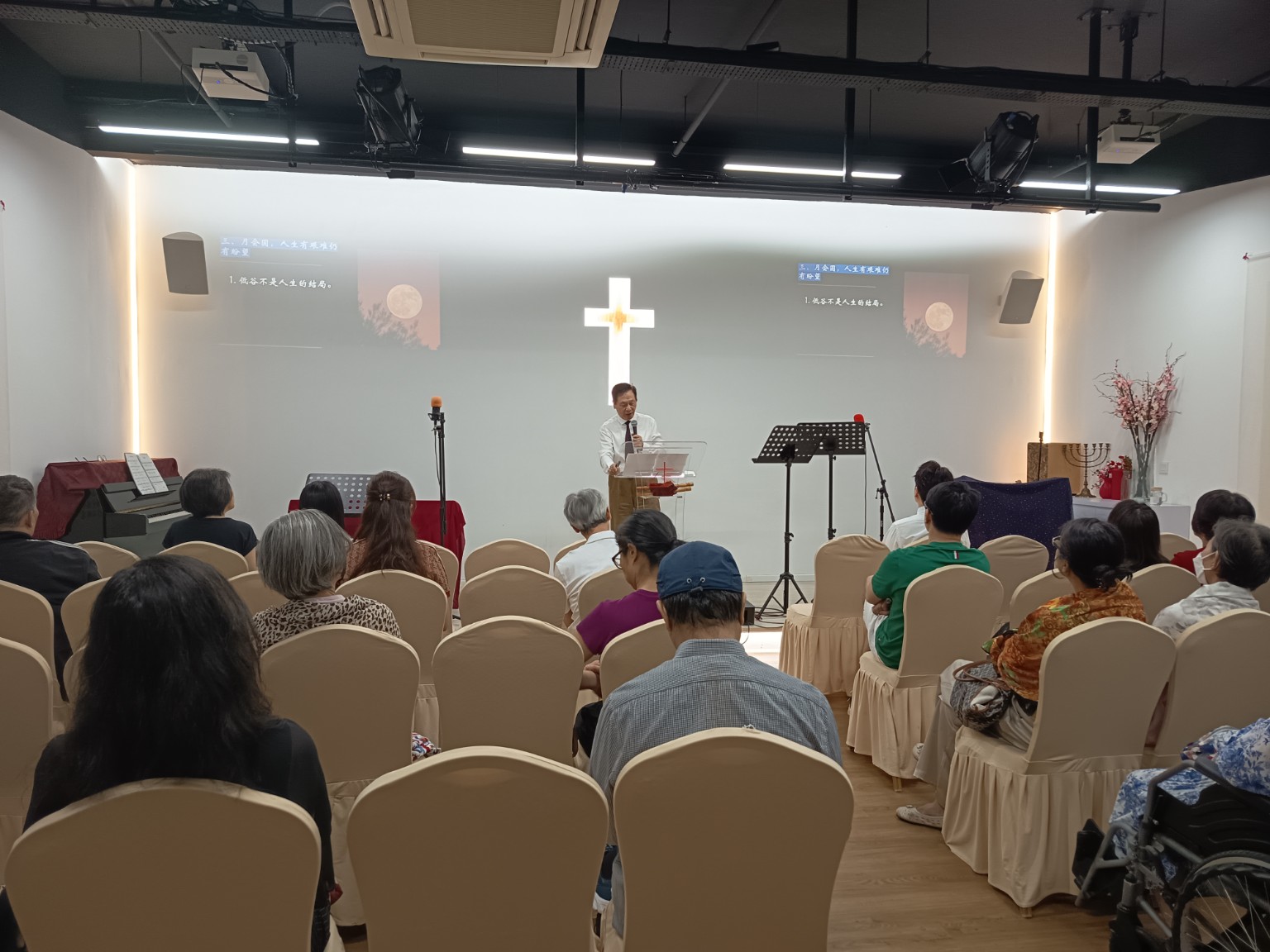
As the world and our lives change, God's faithfulness and love remain the same; he is our sure hope.
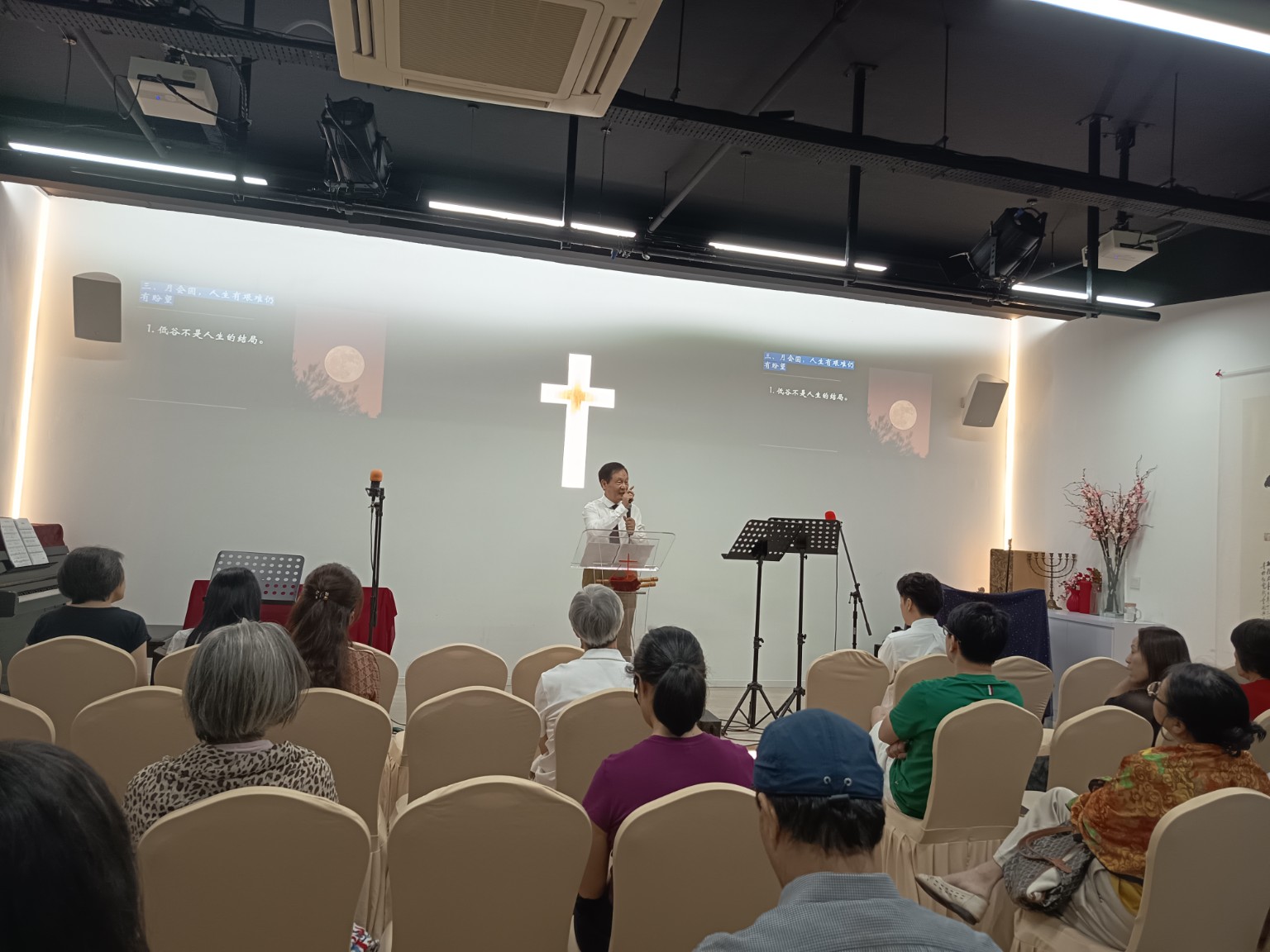
May we build our faith on Christ's unchanging promises and look to him faithfully in both good and difficult times.
After Sunday worship, brothers and sisters shared a special Mid-Autumn buffet. Children played lantern riddles, enjoying laughter and companionship in the warmth of the church family.

A meal and an act of care gave brothers and sisters room to share joy and grow closer in the Lord's love.

Children explored colorful lanterns and riddles, playing together and making happy memories at the Mid-Autumn fellowship.
We come before the Lord and respond to His love in song. Music, voices and the hearts of the congregation join together in thanksgiving.

Musicians and singers work together to offer praise to the Lord who gives every good gift.
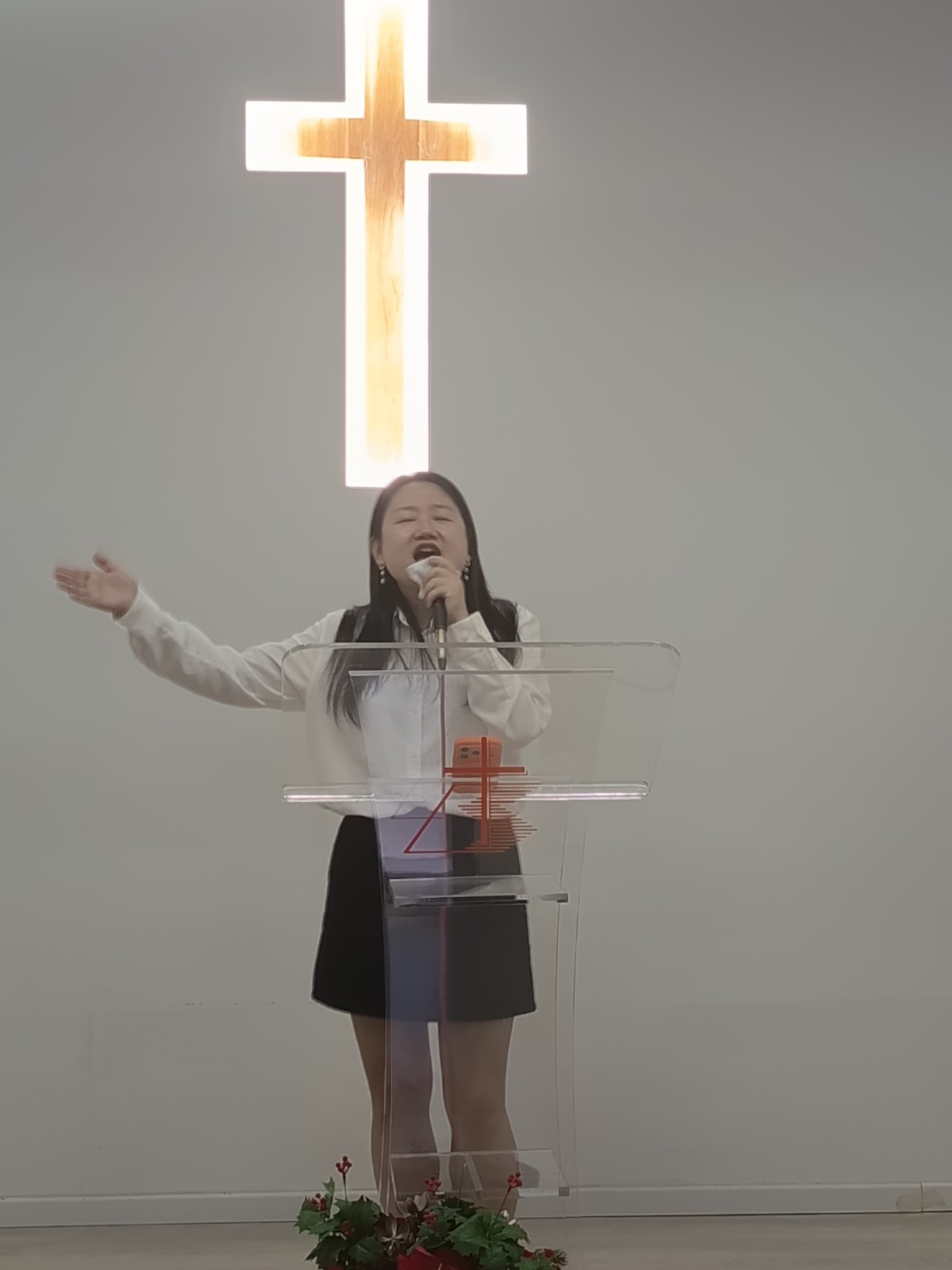
May our songs rise from thankful hearts and turn our eyes once more to Christ who loves us.
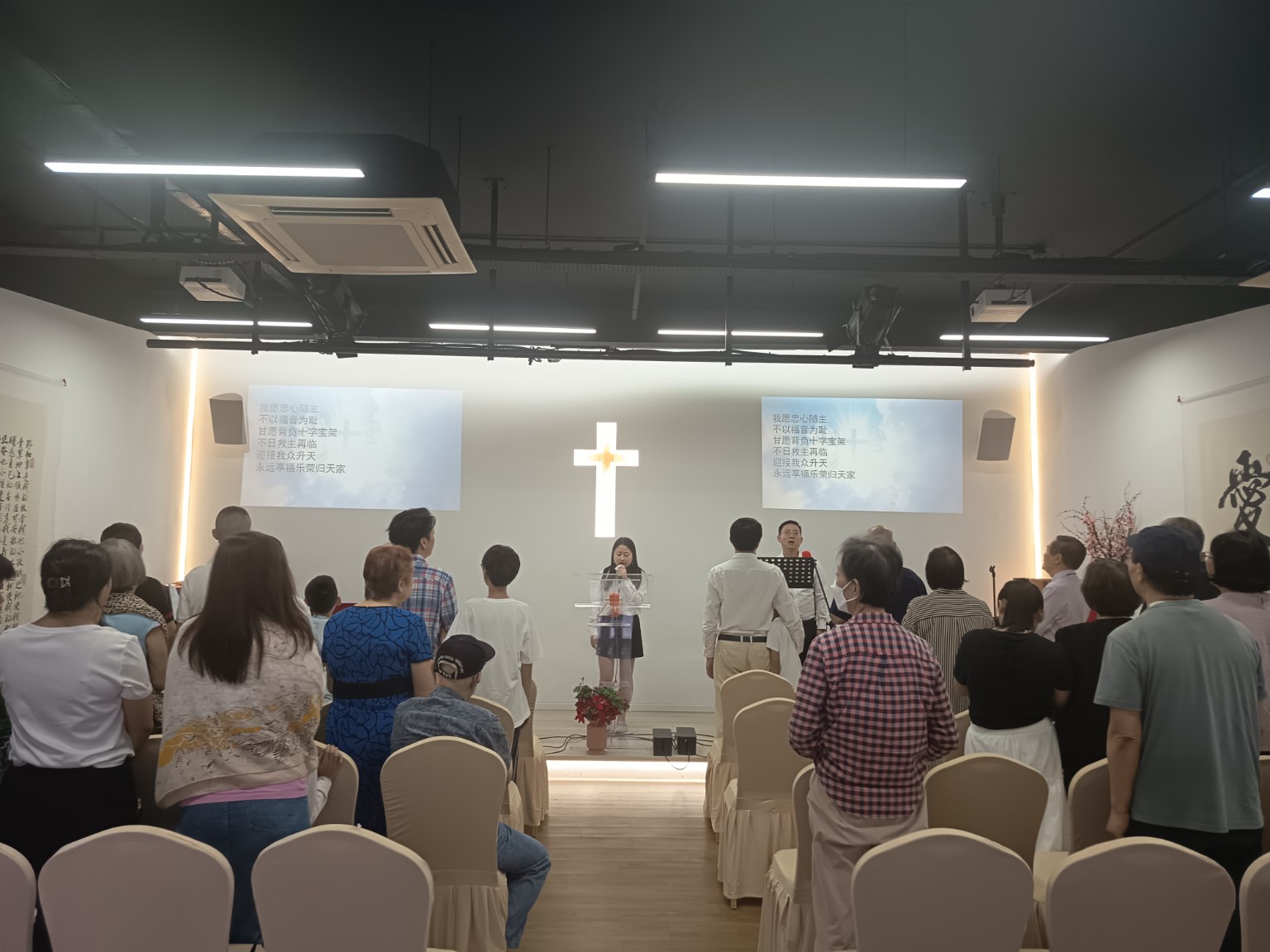
Brothers and sisters sing together, remembering the Lord’s grace, supporting one another and sharing joy in worship.
Pastor Shi Liangqi encourages us to work together with the gifts we have received, serving God and others with humility, faithfulness and love.
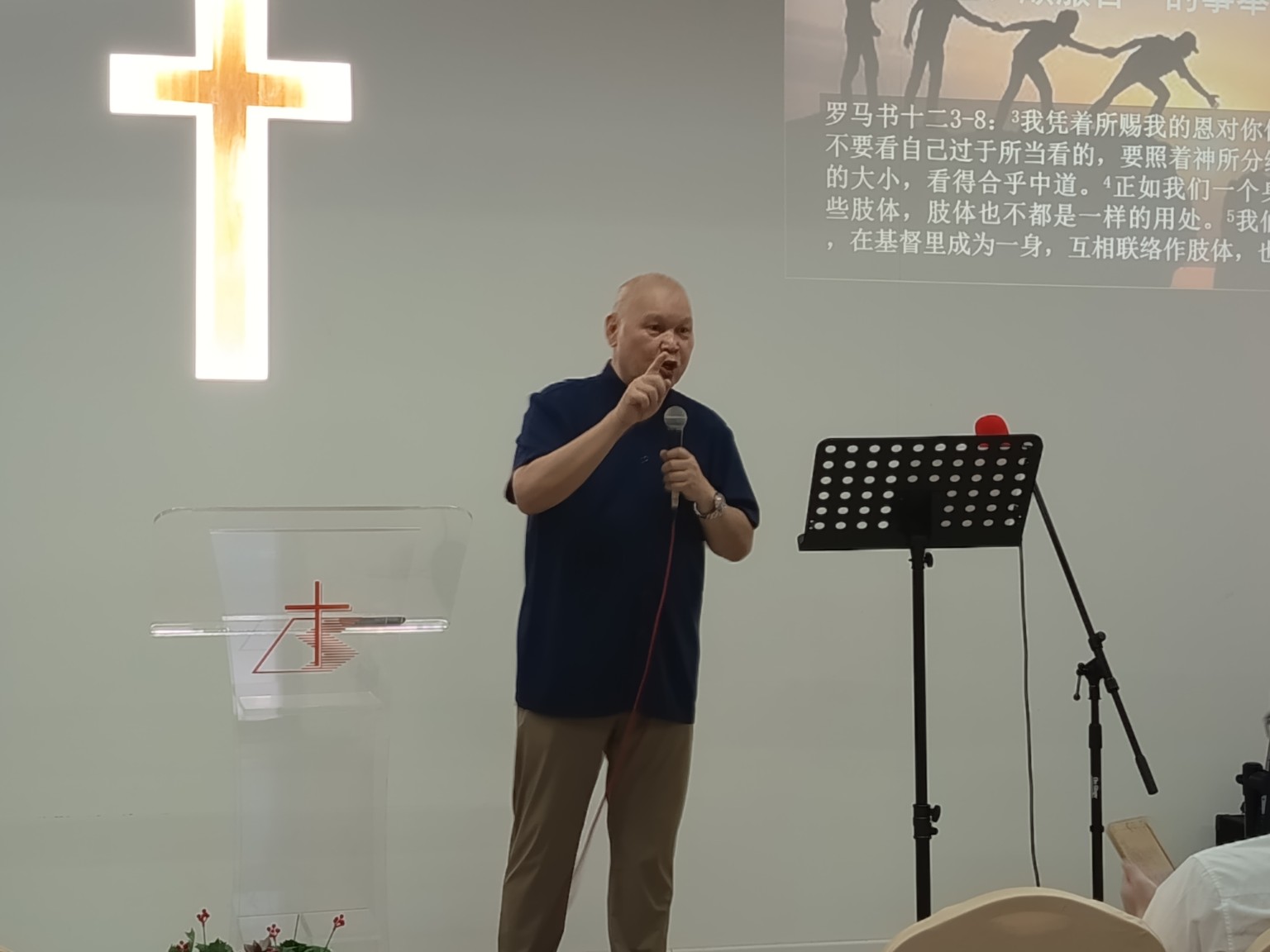
Service begins with receiving grace. May we offer the gifts God has given us with willing and humble hearts.
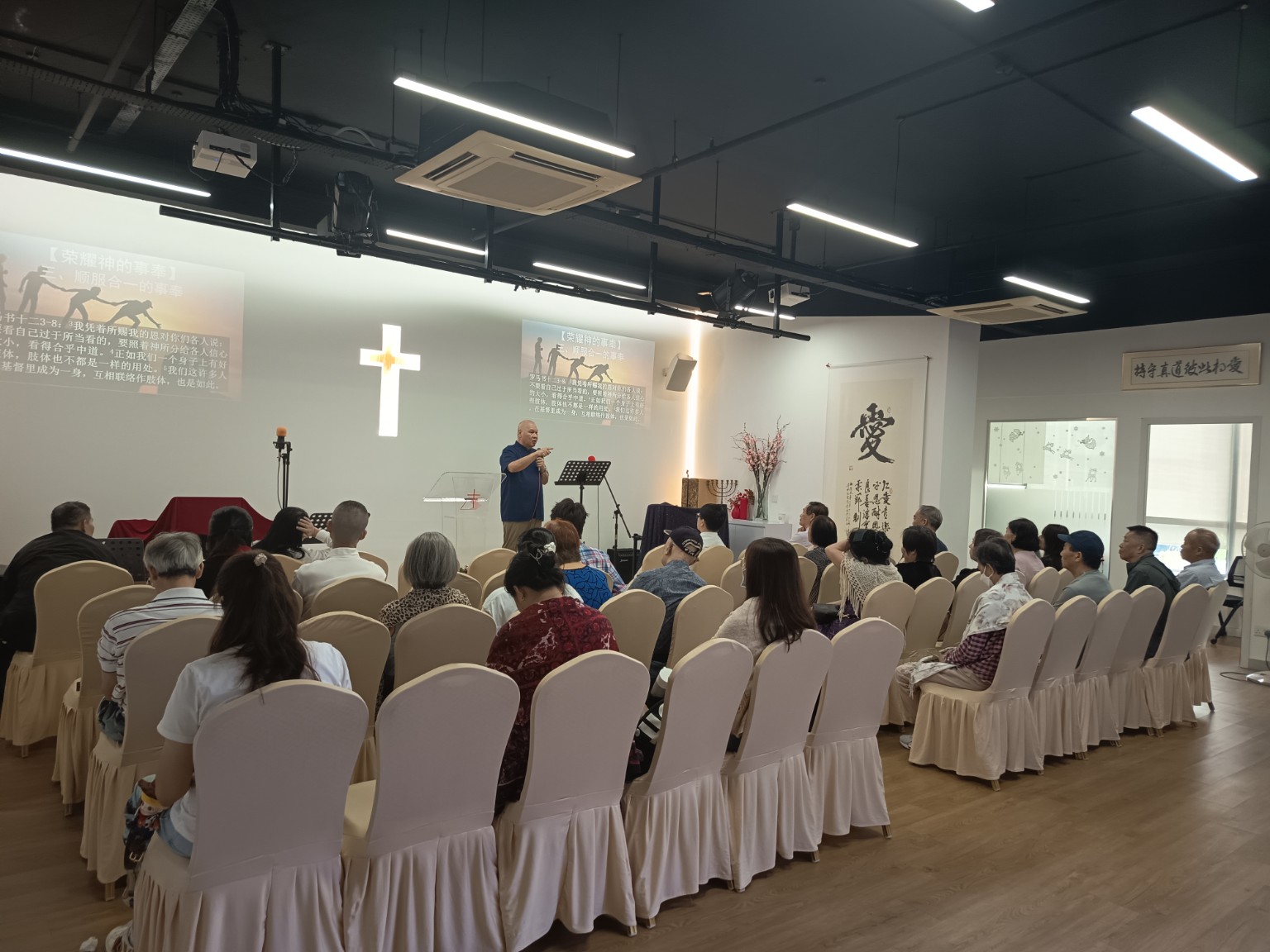
In Christ, we have different roles but belong to one body. Every faithful offering is precious.

We listen with teachable hearts and put what we hear into practice through care and service in daily life.
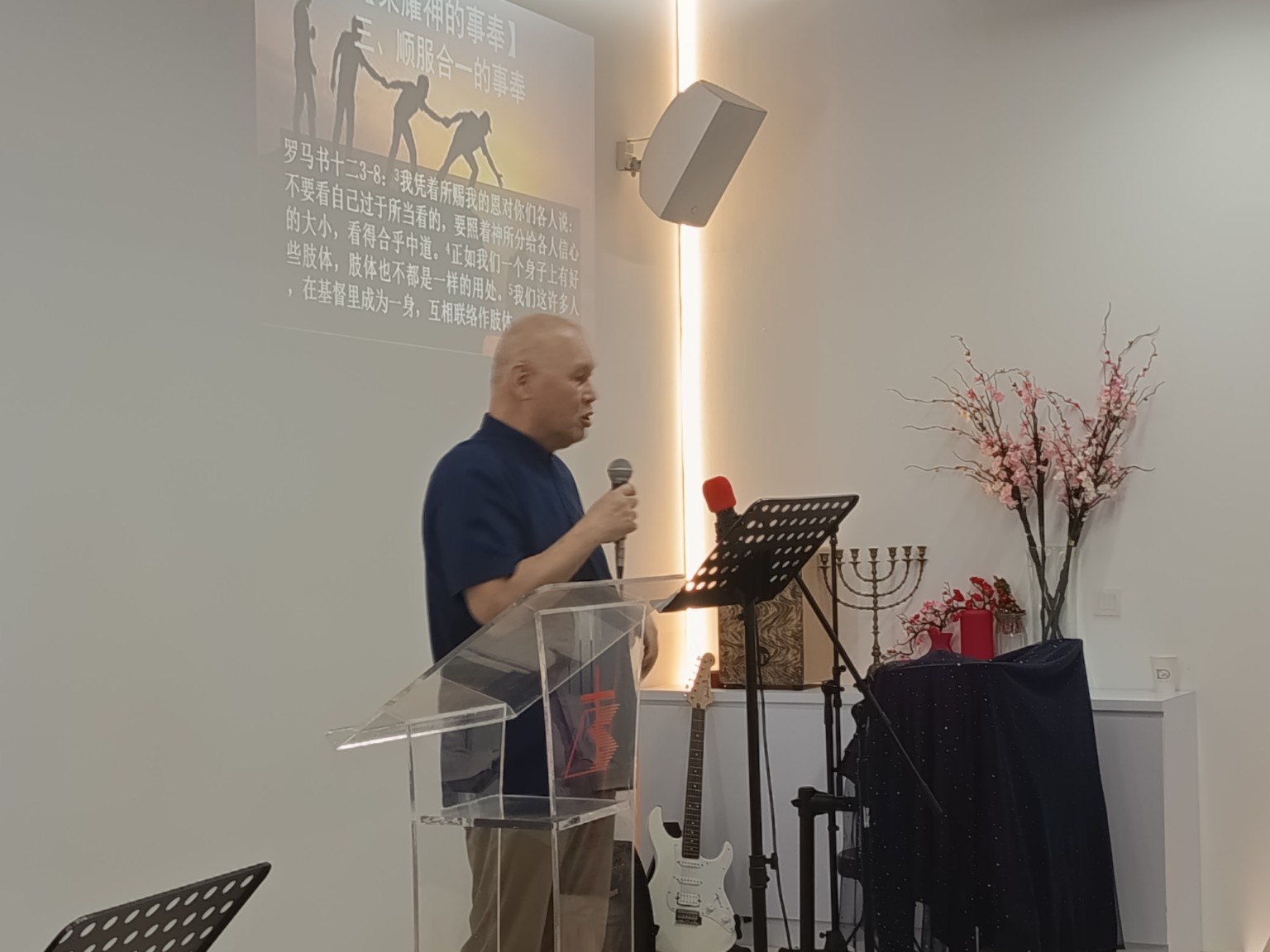
May the Lord guide us to support one another in every ministry so that all our service brings glory to Him.
Brother Anmin shares his testimony after returning from China. During illness he looked to the Lord and found strength; after recovering, he shared this hope with his brothers and sisters.
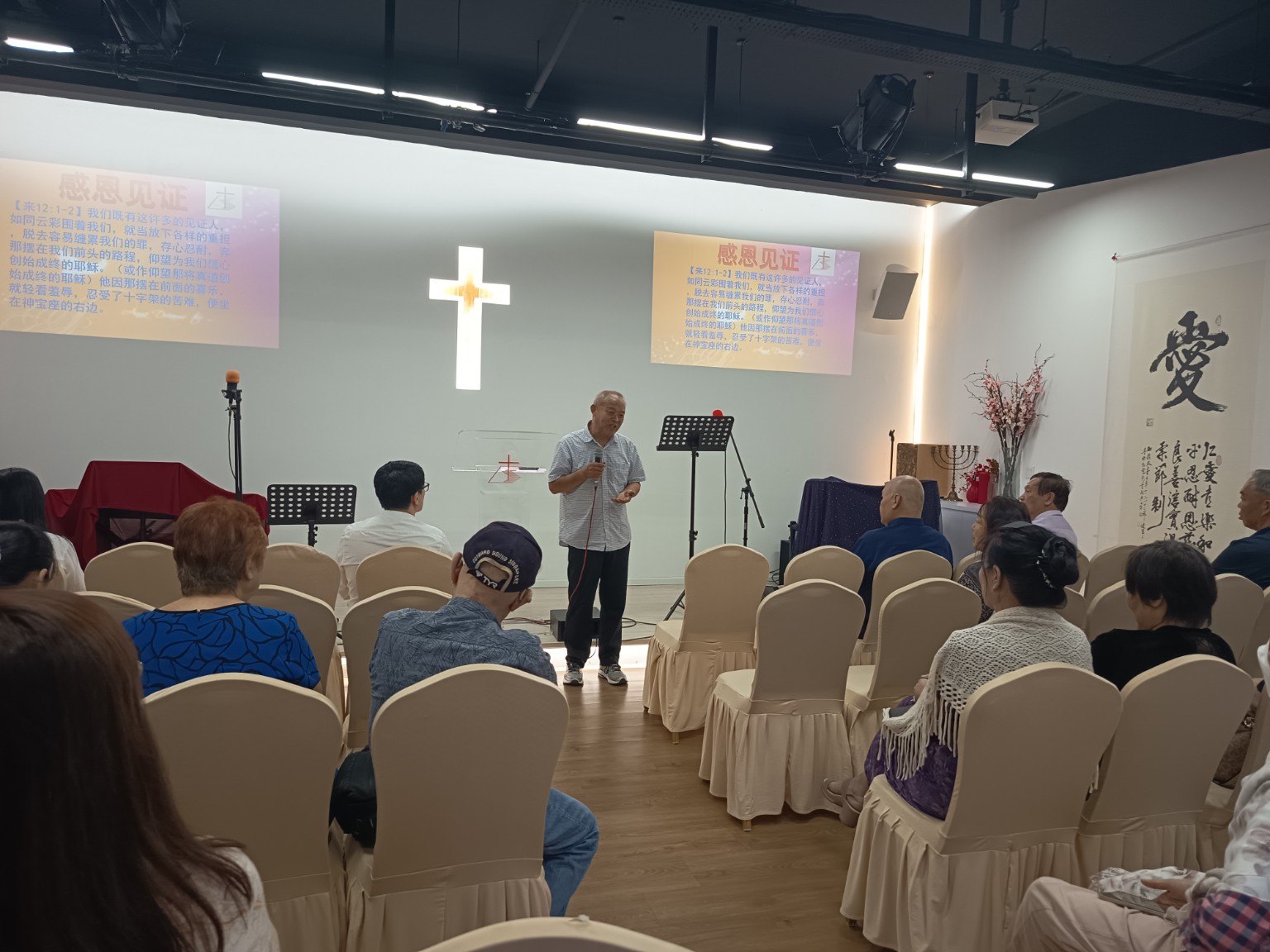
Brother Anmin recounts his illness and recovery, bearing witness to the strength the Lord gave in difficult times and encouraging us to keep looking to Him in every situation.
Before returning to his home country, Brother Benhai reflects on his journey with the church. The pastor and congregation pray blessings over him and preserve precious fellowship memories in photographs.

Brother Benhai shares his thoughts before leaving. We thank the Lord for bringing us together and pray that He will continue to guide the road ahead.
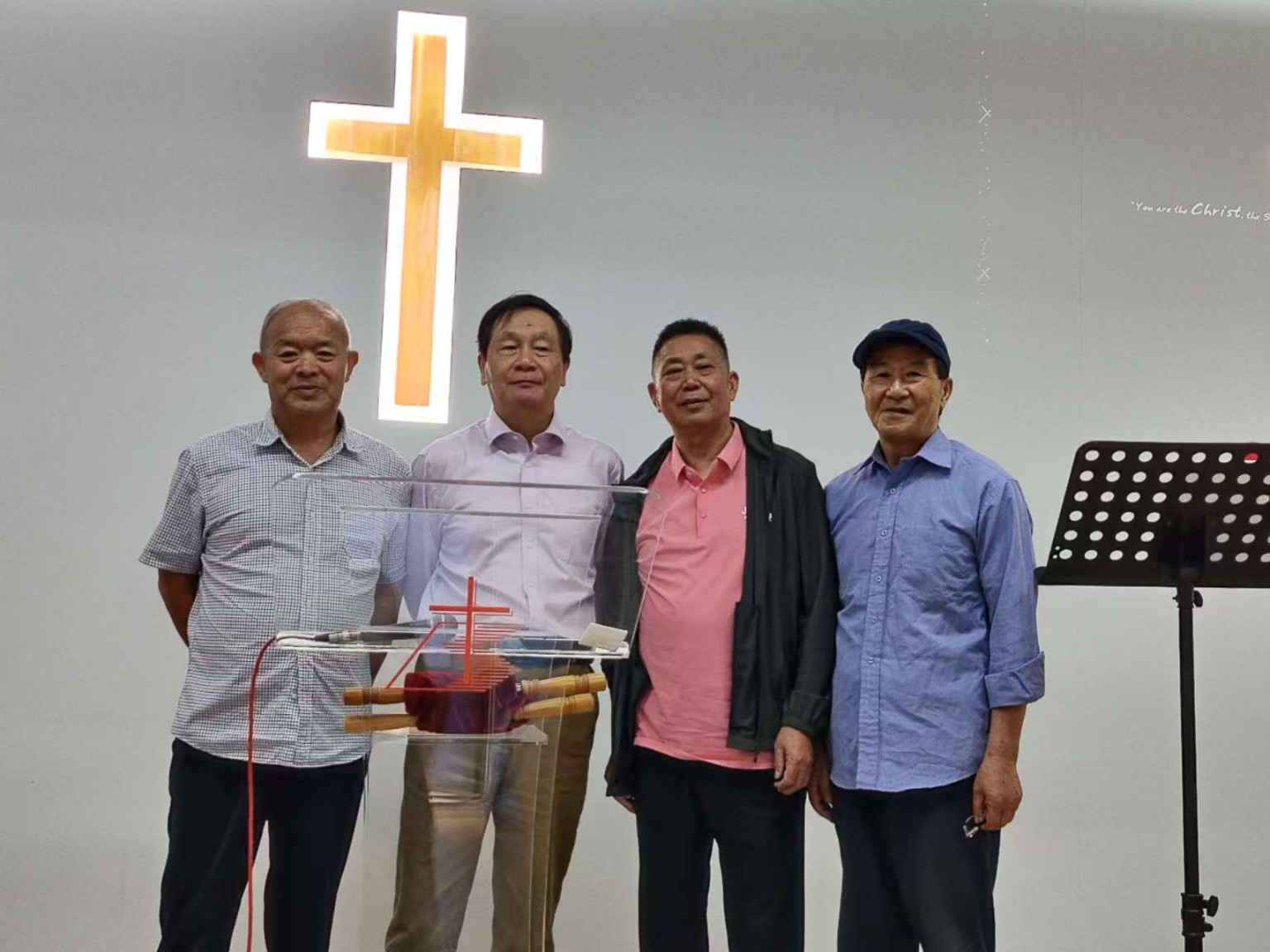
The pastor and congregation offer prayers and blessings for Brother Benhai. A photograph remembers our time together. May the Lord’s peace remain with him.
Every contribution to the gathering is precious. Those at the front and behind the scenes work together faithfully to support our shared worship.

From attentive participation to audiovisual support, brothers and sisters contribute different gifts. May every act of service bring glory to the Lord.
In our spiritual family, we celebrate Brother Xiaolong and Sister Aihua with cake, laughter and birthday blessings, thanking the Lord for life and loving fellowship.

Brothers and sisters offer their wishes and celebrate Brother Xiaolong and Sister Aihua amid candlelight and laughter.

We cut the cake and share the joy. May the Lord bless the year ahead and help us continue supporting one another in love.
Teachers help the children learn from the Bible and build friendships through activities and games. May God’s Word take root in their young hearts.

With patience and care, teachers help children understand the Bible through interaction and enjoy time together.

Children learn through play and respond eagerly. May they come to know the Lord’s love and grow happily in this caring community.
We offer praise in song, united in the Lord and looking to His glory.

The music helps the congregation prepare their hearts and enter worship with gratitude and reverence.

The worship team joins voices and instruments to proclaim their desire to see God’s glory.

Brothers and sisters stand and sing, drawing near to God with sincere hearts and connecting through praise.

Young and old lift their voices together, experiencing unity and joy in the Lord’s love.
Listening closely to God’s Word, allowing truth to shape our lives and strengthen our faith.
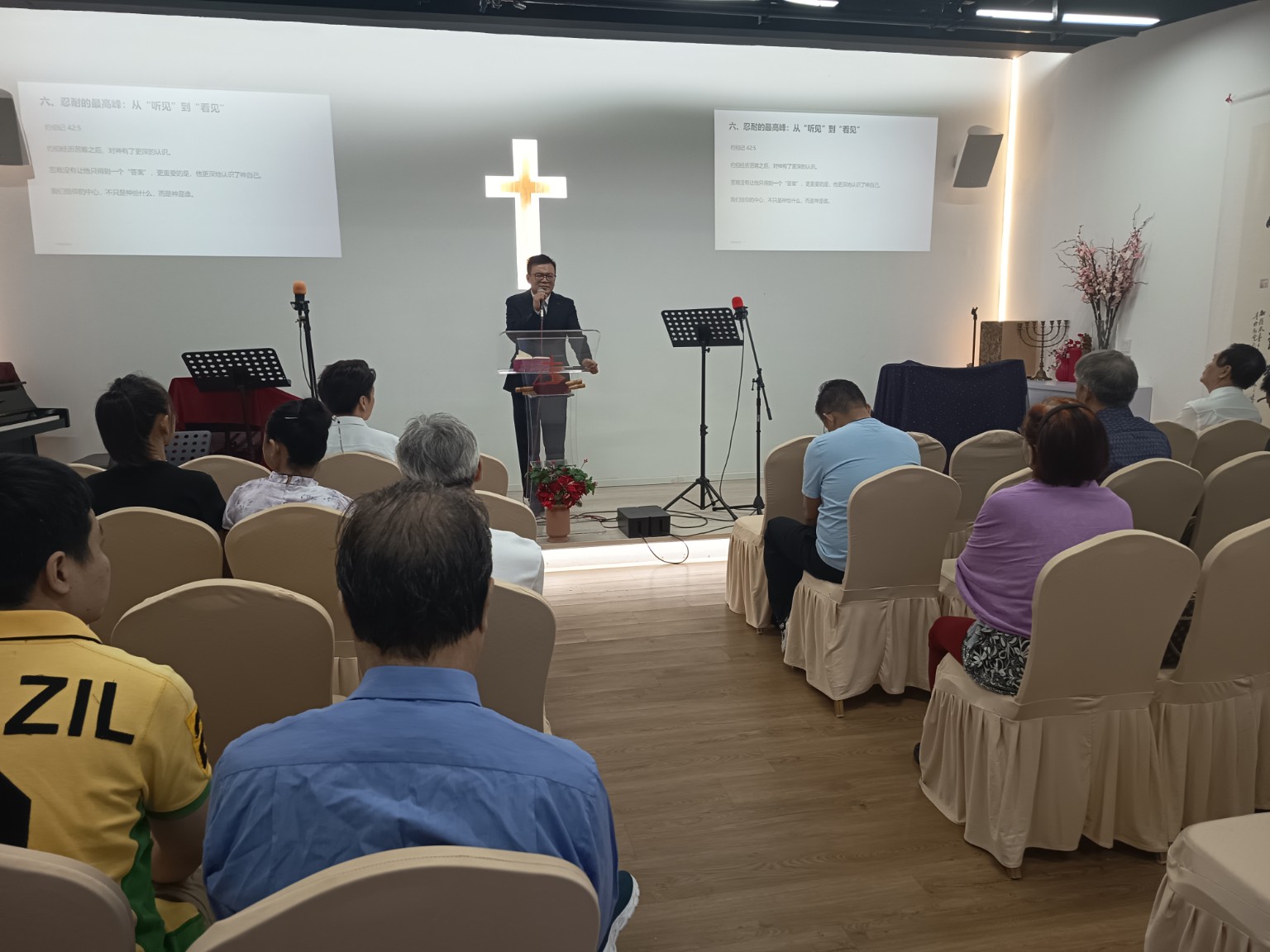
The congregation receives the Sunday message, reflecting, learning and finding strength in biblical truth.
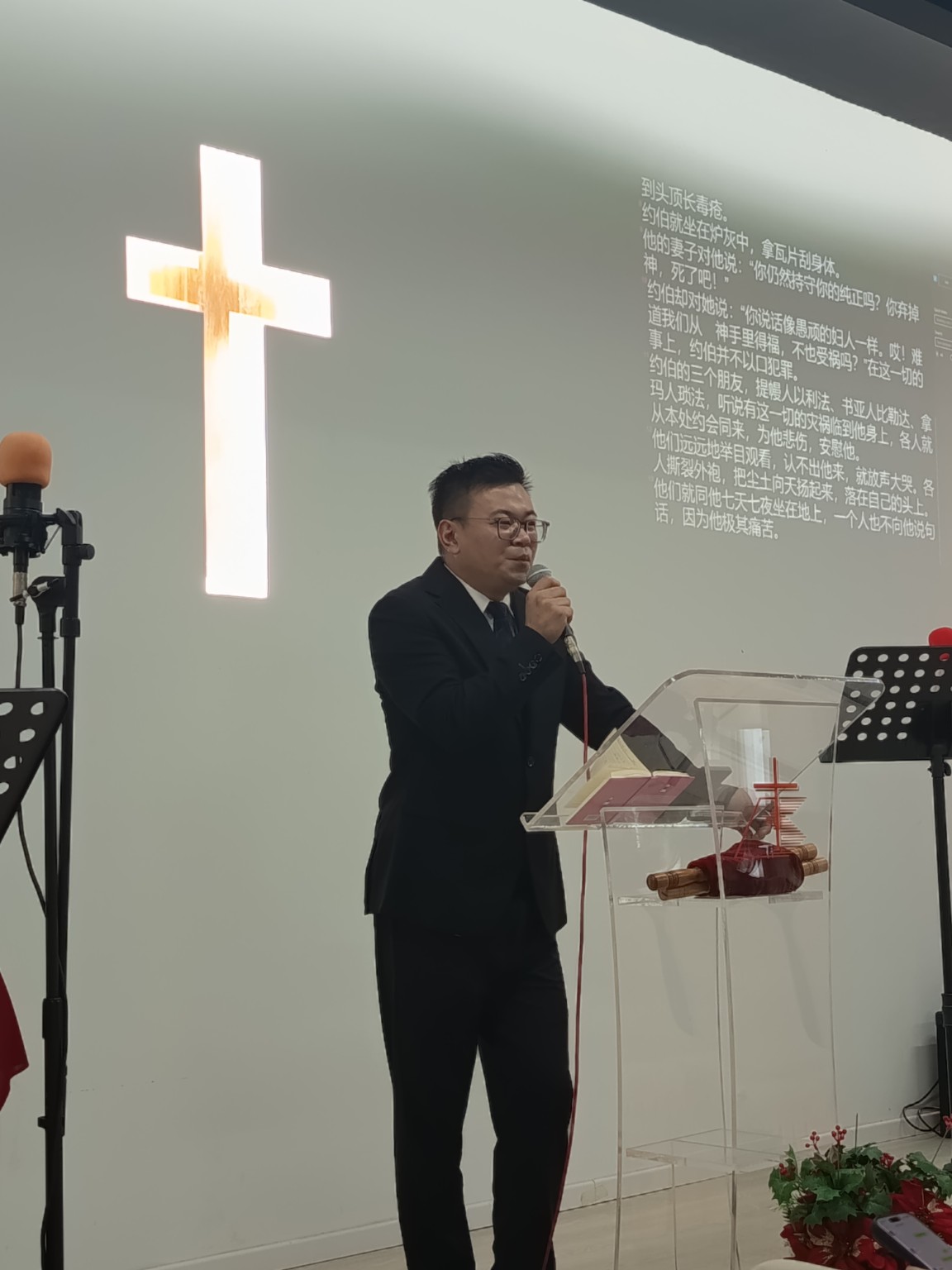
Through Job’s experience, the speaker encourages us to keep trusting God through suffering and waiting.
Helping children understand God’s Word and grow joyfully through love and companionship.

Teachers offer patience and encouragement so that every child feels the warmth of the church family.

Through questions, activities and Bible stories, children learn about God’s love and how to love one another.

Children watch the lesson and respond actively, building a foundation of faith in a relaxed setting.
Faithful cooperation at the front and behind the scenes helps each gathering run smoothly.

Sound and multimedia volunteers coordinate carefully with the service, supporting every part with skill and responsibility.
Reflections on life through the Word and prayer
Here we share recent devotional reflections from church members, hoping to encourage one another through accounts of the Lord’s guidance. Brothers and sisters are welcome to contribute and bear witness together to God’s grace.
"He who has closed eyes plots perverse things; he who has closed lips does evil." Proverbs do not just stop at external words and deeds, but point out the deeper thoughts and motives behind all actions from people's eyes, expressions and silence. People's malice may not be revealed first through words, but is often hidden in thoughts, attitudes, and subtle reactions. Therefore, what spiritual life really needs to deal with is not just behavior, but also the heart that determines the direction of behavior.
"Close eyes" and "clench lips" may seem like very small movements, but they may carry hints, tacit understanding, indifference or deliberate concealment. A look can convey one's position to others, a sneer can express approval, and a deliberate silence can condone injustice. Communication is not just about what we say, but also how we respond. A wise person not only observes external manifestations, but also carefully discerns the motivations behind actions.
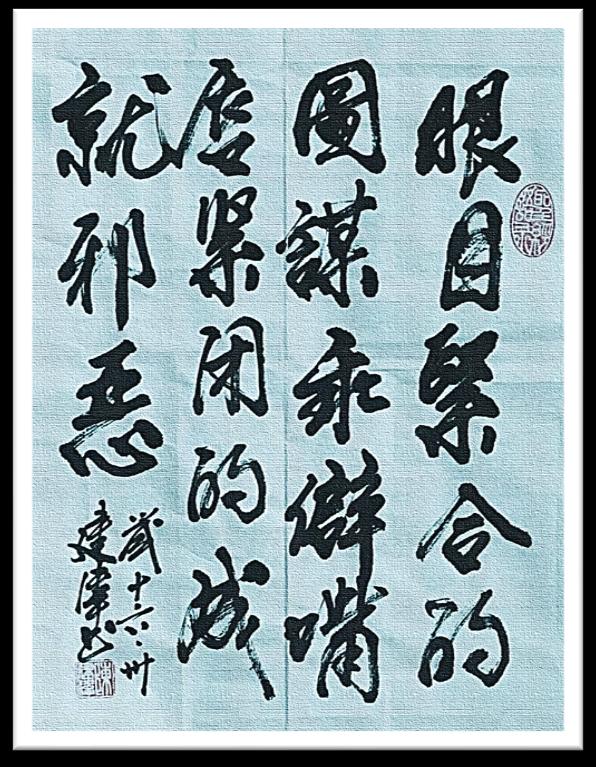
People tend to judge good and evil based on the size and results of things, thinking that as long as they do not openly hurt others, there will be no serious problems; however, the Bible takes their sights deeper. Lies, calculations and harm often start from a secret contemplation, a self-indulgence and a motive that does not want to be exposed. If you only control your outer behavior without allowing God to renew your heart, the hidden problems may one day turn into words and actions.
Silence itself is not necessarily wrong, but when we know that someone is being treated unfairly, but pretend not to know in order to protect ourselves; or when we see rumors and harm, but agree with our expressions and refuse to speak honestly, silence may become acquiescence to mistakes. Christians need to ask the Lord for honesty and courage so that our vision, attitude, and response can stand on the side of truth and love.

Proverbs exhorts us: “Above all else, guard your heart, for from the heart come the results of your life.” True spiritual discipline is to be willing to allow the Holy Spirit to examine our thoughts, motives, emotions, perspectives, and attitudes, and to repent in time before problems become harmful. We cannot hide from God’s sight with silence and disguise, but we can come to Him boldly and ask Him to cleanse, heal and renew our hearts.
“Every man’s ways are pure in his own sight, but the Lord weighs the heart.” God’s words are both a warning and a gentle reminder. Instead of rushing to judge others based on details, we should first examine ourselves: Are my eyes showing contempt? Does my silence hide selfishness? Is my attitude hurting someone? May we bring every minute thought into the light of God with a reverent heart, so that our inner life will be changed by the Lord first, and our outer words and actions will naturally become witnesses of light, honesty and love.

Samson was once chosen by God, full of power, and ranked among the great men of faith; however, he failed to keep his covenant with God. Instead, he continued to indulge the lust of his eyes and ignore spiritual boundaries. Eventually, he went from a hero with God's presence to the tragedy of being bound by sin. The article reminds us through the life of Samson: Gifts cannot replace holiness, and strength cannot replace self-control; spiritual failure often does not happen in an instant, but is gradually accumulated from compromises and distances from God.
Samson was set apart by God before he was born, shouldering the mission of saving the Israelites, and performed many great deeds under the power of the Holy Spirit. He could defeat powerful enemies and hold up city gates, but he failed to protect his heart. Spiritual experience, service positions, and external abilities cannot be a guarantee for sin; the more a person is used by God, the more he needs to humbly rely on the Lord and guard his life carefully.
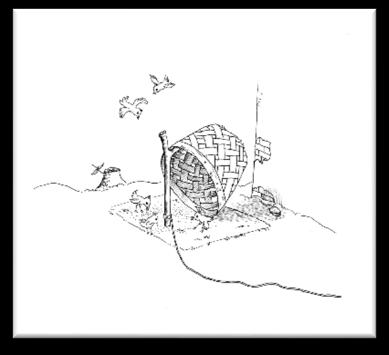
Samson's tragedy begins again and again with "seeing" and "loving." When personal preferences are higher than God's word, desire will gradually obscure spiritual eyes, causing people to approach sin even though they are aware of the danger. Biblical boundaries are not to deprive people of their freedom, but to protect lives from falling into bondage. Christians need to bring their eyes, thoughts, and emotions to the Lord and refuse to let temporary gratification replace loyalty to God.
Samson could defeat a thousand enemies, but he could not overcome repeated temptations. Today's believers and ministers will also face the test of lust, money, and power. True strength is not only the ability to accomplish conspicuous and great things, but also to maintain holiness when no one sees it, to still choose the truth when fighting in the heart, and to seek timely help from the Lord and spiritual companions in times of weakness.
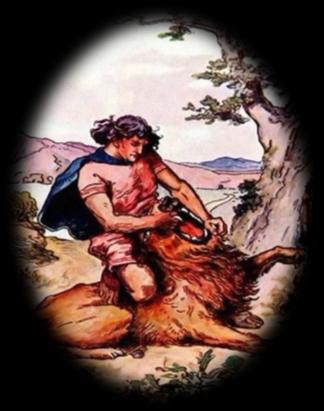
Samson's hair itself was not a source of power, but rather a sign of his sanctification to God as a Nazarite. When he revealed the secret to Delilah, it was clear that he had already despised God's trust and treated the solemn covenant as something to be tempted. The most terrifying thing is not that the power suddenly disappears, but that "the Lord has left him, and he does not know it." If we ignore God’s word for a long time, resist reminders, and rationalize sin, we may unknowingly lose our spiritual acumen.

Samson's final defeat was not an accident, but the cumulative result of many small failures. Sin often makes people think they are still in control until their lives are tightly bound. We should come to the light when the problem is still small and receive the enlightenment of the Holy Spirit and the exhortation of the members; we should not wait until our relationships, families, services, and testimonies are seriously damaged before we admit that we have strayed from the right path.
The story of Samson is both a serious warning and an urging for us to turn around today. We cannot rely on past experiences, gifts, or achievements, but we must abide in the Lord day by day. If you find that you have been weak and fallen, you should honestly confess your sins, stop compromising, and seek God's mercy and renewal again. May we not only pursue becoming powerful people, but also become loyal, holy people who can persevere to the end, so that God’s entrustment can be completed in our lives.
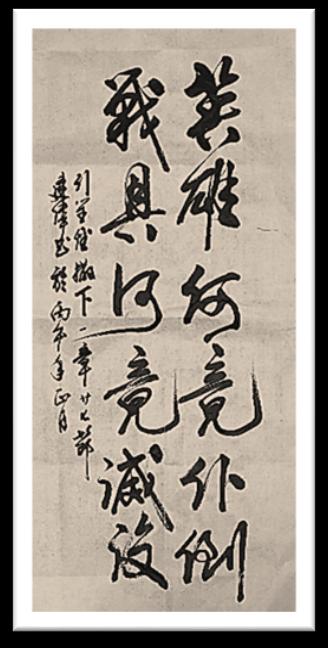
“The father of a righteous child has great joy; a man who fathers a wise son rejoices in him. May your father and mother rejoice; may she who gave you birth be joyful!” Parents' deepest joy is more than seeing their children succeed. It is seeing them fear God, walk in the right way, and live wisely and uprightly.
The world often measures success by wealth, education, career and status, and parents hope their children will bring honor to the family. Scripture points to something deeper: not how impressive we appear, but whether we are righteous, honest, humble and reverent toward God. A child who acts uprightly, keeps a pure heart and follows the truth brings lasting comfort to their parents.
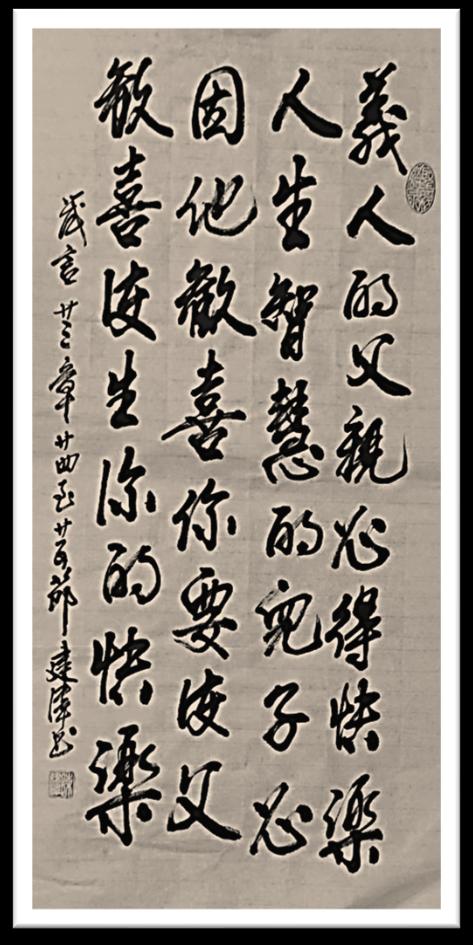
Parents naturally care whether their children eat well, attend a good school and find stable work. They should also ask whether their children know and fear God and are forming character in the truth. Raising a child means caring not only for body and education but also for the heart, teaching honesty, self-control, responsibility, obedience and love. A child growing in wisdom gives parents real joy.
Providing for parents, speaking kindly and spending warm time together are precious. Scripture also shows that honoring parents includes turning away from sin, holding to holiness and humbly following the Lord. Parents grieve deeply when children leave the right path, and find great comfort when they live in God's truth. Each time we restrain selfish desire, stand for what is right and act wisely, we respond meaningfully to our parents' care.

The greatest inheritance parents leave their children is more than money and opportunity: it is a life that fears God. If we want children to love God, we must love him first. If we want them to read Scripture and pray, we must draw near to the Lord faithfully. If we want them committed to church, we must value fellowship and worship ourselves. We cannot ask children to walk a path we will not take; the example they see each day is often the most powerful teaching.
Paul praises Timothy's sincere faith, which first lived in his grandmother Lois and mother Eunice. One generation influences the next, showing how spiritual life can be passed through a family. Good parents seek more than prosperity for their children; they lead them toward a life that fears God. Children who respond with faithfulness, integrity and service bring a beautiful return on their parents' years of love.

Proverbs makes us think of our earthly parents and also of our heavenly Father's will. The deeper question for Christians is not simply “Have I succeeded?” but “Does my life please God and bring glory to him?” May parents guide their children with godly examples, and may children comfort their parents through wise and upright living. As families support and honor one another, may their homes bear witness to God's grace and truth.
Read original PDF (Chinese) ›“Buy the truth, and do not sell it; get wisdom, discipline and understanding.” Salvation is God's free gift of grace. Yet holding to the truth and living it out often calls for a willing sacrifice.
To “buy” here does not mean paying money for truth. It means recognizing its great worth: giving time and effort to it, and setting aside what does not please God when we make choices. We study to gain knowledge, work to build a career, practice self-control for health, and invest in family. Spiritual life also deserves earnest pursuit. The value of truth is seen less in how much we profess than in how willing we are to live by it.

We may know we should forgive yet cling to hurt; know we should be honest yet compromise when gain is at stake; know we should love others yet insist on our own way out of pride or temper; know we should draw near to God yet give all our time to work, entertainment and busyness. The call to unite knowledge and action reminds us that truth has not fully become part of our lives until we act upon it.
Wealth can disappear, status can change, and praise from others will pass away. God's truth alone remains. When wise people face a choice, they ask not only “Will this benefit me?” but “Is it true? Does it please God?” When immediate gain conflicts with God's will, may we choose truth with reverence, for that is where a wise life begins.
The danger in life is not only never knowing the truth; it is also receiving it and later selling it for something else. Some abandon principle for money, conscience for a position, faith for a relationship, or biblical conviction for applause. Others set lasting spiritual values aside for convenience. Judas warns us not to trade eternal worth for temporary profit, God's pleasure for human praise, or an authentic life for ease today.
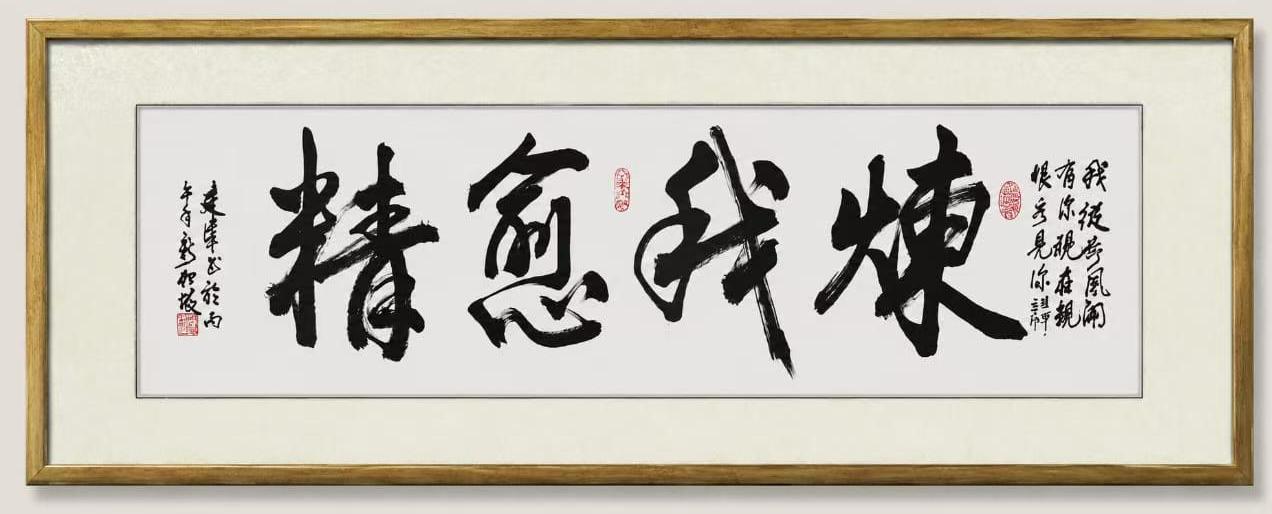
Proverbs places wisdom, discipline and understanding alongside truth. Wisdom knows how to live according to God's will; discipline accepts his correction; understanding discerns right from wrong and chooses well. Truth is more than knowledge in our minds. It changes our temper, speech, relationships and direction, shaping us to become more like Christ.
James 1:22 says, “Do not merely listen to the word, and so deceive yourselves. Do what it says.” Someone may know much Scripture yet fail to restrain their temper; understand many teachings yet refuse to love those nearby; listen to sermons yet reject correction; know God's will yet insist on their own. What they possess may still be knowledge rather than truth lived out. Truth is not a collection on a shelf; it should become the path beneath our feet.
Is more money worth losing family? Is praise from others worth abandoning principle? Is immediate gain worth sacrificing conscience? Is the world worth drifting away from God? These questions help us recognize what is truly precious and turn back before selling the truth that matters most.
May we accept having less of what the world offers rather than less of God's truth; lose some applause rather than God's pleasure; and suffer a temporary disadvantage rather than wound our conscience. May the Lord give us courage not only to know truth but to hold to it and live it, so that our lives stand firm in his word.
Read original PDF (Chinese) ›“One who has unreliable friends soon comes to ruin, but there is a friend who sticks closer than a brother.” We need friends, yet the aim is not simply to have many. We must learn to discern wisely in the light of truth and build sincere, dependable relationships through Christ's love.
Seeking friendship only for activity or numbers can leave us vulnerable when we fail to discern wisely. A true friend helps carry burdens and doubles shared joy. Friendship is more than a passing connection: trust and closeness grow as two people appreciate, care for and respect one another. A friend who remains beside us in hardship is a precious gift.

Proverbs warns that gossip, uncontrolled anger, indulgence and inconsistency can lead relationships into conflict and harm. Choosing friends carefully is not proud judgment; it recognizes that companions influence one another. We should draw near to people who are honest, kind and willing to accept truth, while asking whether we ourselves are becoming trustworthy friends.
Good friendship needs both love that draws near to people and wisdom that discerns character. Warmth without discernment can lead to misplaced trust; caution without love can leave us closed off and lonely. Mature friendship opens the heart sincerely while keeping healthy boundaries. It listens and makes room for others without abandoning truth and principle.
Each person is God's unique creation, and knowing someone takes time. A good first impression does not mean we already know them. Dependable relationships grow through sustained time together, shared experiences and kept promises. There is no need to rush friendship. Let time show whether words and actions agree, and learn to trust through honest conversation.

Proverbs 17:17 says, “A friend loves at all times, and a brother is born for a time of adversity.” Friendship means more than sharing happy times: it cares, visits and helps through illness, poverty, weakness and danger. If we can help but turn away when a friend needs us most, the relationship loses its purpose. Real love acts and is willing to bear a cost for another person.
Jesus is our closest and most dependable friend. He knows our weakness completely, yet seeks, welcomes and saves us through self-giving love. Christians should start from that love in their friendships: consider another's needs, offer help when it is needed, speak truth with love when someone errs, and pray for one another.
May God give us wisdom to avoid relationships that harm our lives, and love and loyalty so that we not only find good friends but become good friends to others. May every friendship be cleansed and strengthened in Christ, becoming a blessing of mutual support and growth.
Read original PDF (Chinese) ›“Encourage one another and build each other up, just as you are already doing.” Christians need quiet solitude before God and fellowship in which we support one another. These complement each other, and neither should be neglected.
Services, Bible studies, visits and ministry fill Christian life with relationships. Yet when time alone becomes scarce, we may bring unresolved loneliness, disappointment and inner conflict into the community. True solitude means honestly facing ourselves before God, allowing prayer and His Word to reorder our lives. We learn to accept ourselves and prepare hearts that can welcome others.

Fellowship is a community learning forgiveness, patience and mutual support in Christ, even amid friction. Those who can be alone and accept themselves before God can also enter community with grace. Healthy fellowship helps individuals grow in freedom, strength and maturity. Fellowship without solitude can become empty words and feelings; solitude without fellowship can lead to vanity, self-absorption and disappointment.
Christians need regular solitude, ideally each day. This is time for meditating on Scripture, prayer and intercession. We need not seek a special feeling every time. Just as the body needs food, spiritual life needs God’s Word, a lamp to our feet and a light for our path. Even when it feels ordinary, we can remain faithful and allow His Word to shape our direction.
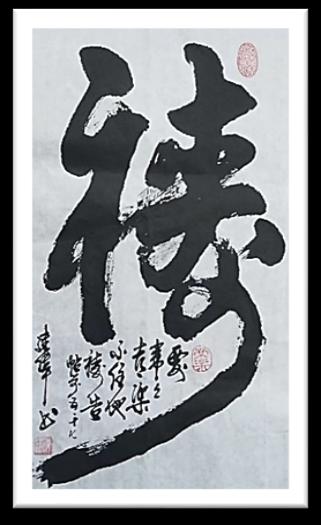
Christian community should begin with, and draw from, our personal life before Christ. In fellowship we learn how to be alone rightly; in solitude we learn how to live rightly with others. Meaningful relationships require quiet, and healthy solitude requires valuing fellowship and accepting responsibility for others.
May we know God more deeply in solitude and learn to love others in fellowship, without hiding our hearts behind busyness or shutting others out in loneliness. There is a time for solitude and a time for fellowship; God makes everything beautiful in its time.
Read original PDF (Chinese) ›“Better a dry crust with peace than a house full of feasting with strife.” The richness of a home lies also in whether family members understand one another in love and walk together in peace.
A loving, harmonious family can support one another and face difficulties together. Constant quarrelling makes even abundance wearying. Scripture reminds us to treasure peace in relationships above material wealth. For older people, grandchildren are a crown; the love of younger generations and family companionship bring precious comfort.

The story of Six-Foot Alley tells how Zhang Ying asked his family to yield three feet of land, and their neighbours responded in kind. The alley became a reminder of humility and harmony. Yielding can express a willingness to set aside our insistence because we value relationships. Many disputes can be stopped early, before they become as hard to control as water breaking through a dam.

Scripture says that without wood a fire goes out, and without gossip quarrelling ceases. An unverified remark or a response determined to win can fuel conflict. Those who have received grace learn to restrain their tongues, avoid spreading hurtful words and pause before insisting they are right. Let us examine ourselves quietly before the Lord and keep disputes from spreading.
When Abraham’s and Lot’s herdsmen quarrelled, Abraham sought peace and let Lot choose first. He could set aside immediate advantage because he trusted God’s promise and provision. True faith allows us to entrust gain and loss to the Lord instead of protecting ourselves through contention.
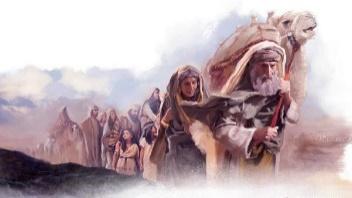
James reminds us that bitter jealousy and selfish ambition bring disorder. Wisdom from above is pure, peace-loving, gentle and willing to listen, bearing the fruit of righteousness. Peacemaking means addressing problems with loving, truthful communication, learning forgiveness through grace and taking steps to restore relationships.
May we follow the humility and gentleness of Jesus, becoming peacemakers in our families, church and relationships. Even with only a dry crust, where people love one another and look to the Lord together, there is peace and abundance from God.
Read original PDF (Chinese) ›Recognising grace awakens our hearts; giving thanks responds to that grace. The first helps us see what we have received, and the second guides us to live it out.
Life, ability and the support we receive are not things we can take for granted. Awareness of our limitations, alongside the Lord’s sustaining care, makes us sensitive to grace. The apostle Paul looked to the Lord’s strength in weakness and acknowledged that he was who he was by God’s grace. Such awareness keeps us humble and helps us recognise the source of our blessings.
Thanksgiving includes turning back to the Lord and responding through words, obedience and sharing. Jesus healed ten people with leprosy, but only one returned to thank Him. This invites us to ask whether, after receiving grace, we still draw near to its Giver. Giving thanks in all circumstances means trusting God’s goodness amid changing situations, even when hardship brings no happiness.
Feelings alone can fade as circumstances change. When we count blessings, value others’ care and pass on the love we have received, thanksgiving becomes a habit. Practising gratitude helps us notice the Lord’s guidance, and recognising grace encourages a faithful response.
May we have hearts moved by grace and lives that offer thanks to the Lord. Recognising grace brings humility; thanksgiving brings faithfulness, leading us from asking what we have received to considering how we should live.
Read original PDF (Chinese) ›“Differing weights and differing measures are both detestable to the Lord.” In ancient times, weights and measures determined fairness in trade. Today this verse also examines our words, relationships and hearts.
We may readily see others’ faults while excusing our own, or require others to keep their word while quietly relaxing the standard for ourselves. Such double standards call us to examine our hearts honestly before God. The Lord delights in sincerity, fairness and integrity.
Faith extends beyond the moments others can see. At home, at work and when alone, we are called to the same reverence before the Lord. Let us be gentle in public and keep a clear conscience when unseen, showing mercy to others and admitting our own wrongs. God examines hidden hearts and graciously leads us to repentance and renewal.
We can pray with practical questions: Have I treated someone unfairly? Am I lenient with myself but harsh toward others? Are my words and actions honest? Self-examination helps us rely on the Lord, let go of pretence, repair relationships and walk in truth, rather than remain trapped in self-blame.
May we maintain upright hearts in matters large and small, assessing our lives before the Lord instead of by worldly measures of gain and loss. Let the same sincerity run through public and private life, making our lives a witness.
Read original PDF (Chinese) ›We welcome you to get in touch

Save and share this QR code in your WeChat groups, or print it for display
If you would like to support the church’s ministry, scan the QR code below to give. Thank you for your love and support in the Lord.

BAI SHENG CHURCH LTD.
Download High-Resolution QR Code